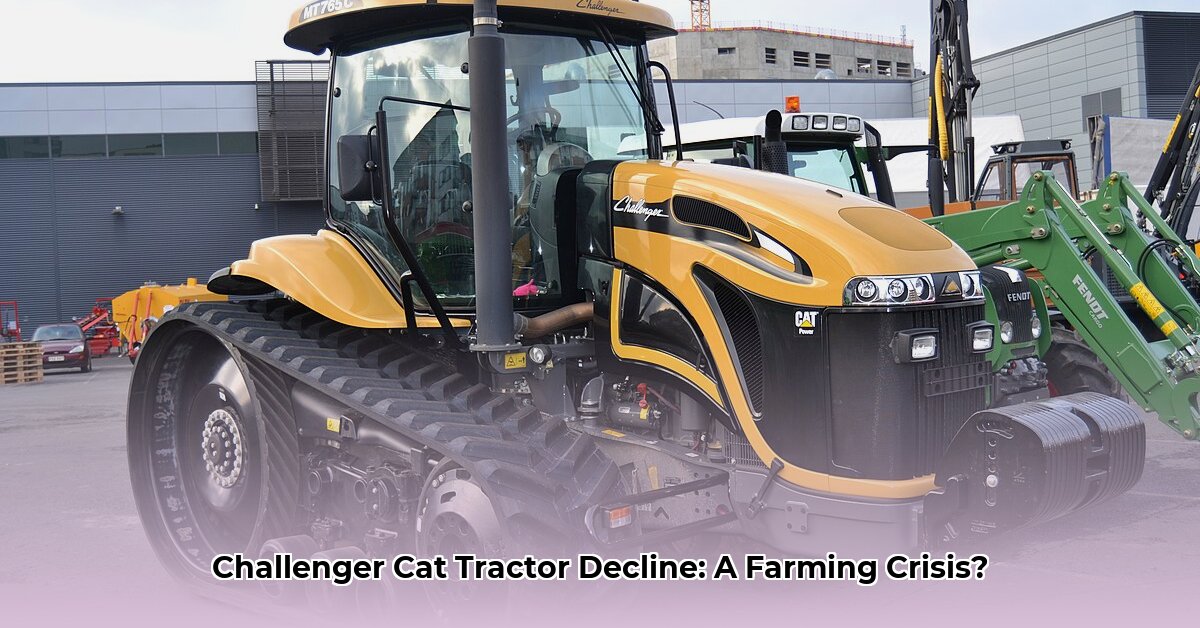
Cat Tractor Challenger: A Case Study in Agricultural Machinery and Sustainable Farming
The Challenger Cat tractor, once a prominent name in agriculture, offers a compelling case study on the interplay between business strategy, technological innovation, and the realities of sustainable farming. This analysis explores its rise, fall, and the lasting implications for the industry and farmers. Why did a seemingly successful brand disappear? How did its parent company's decisions affect sustainable farming practices? And what lessons can be learned from its decline? For smaller tractors, consider exploring other options like smaller tractor options.
The Challenger's Rise and Fall: A Timeline of Innovation and Disruption
The Challenger's journey began in the mid-1980s, marked by the introduction of its innovative Mobil-Trac technology. This system delivered superior traction and performance, quickly establishing the Challenger as a favorite among many farmers. However, this initial success couldn't withstand the shifting sands of the agricultural machinery market. Acquired by AGCO in the late 1980s, the Challenger brand was eventually phased out in 2020. This decision wasn’t arbitrary; it reflects a complex interplay of market forces, corporate strategy, and the evolving demands of sustainable agriculture. But what exactly led to its demise? Didn't its innovative technology offer a competitive edge?
Pivotal Point 1: The Challenger's innovative Mobil-Trac technology initially gave it a significant competitive advantage, but this advantage was not sustainable in the long term due to market shifts and corporate strategy.
Pivotal Point 2: AGCO's decision to consolidate its product lines, focusing resources on higher-horsepower tractors, ultimately led to the Challenger's discontinuation. This prioritized economies of scale over maintaining a diverse range of models.
Pivotal Point 3: The discontinuation of the Challenger had a significant impact on farmers, forcing them to adapt to limited parts availability and alternative machinery options, potentially affecting their farm's sustainability practices.
Market Consolidation and the Competitive Landscape
The agricultural equipment market is fiercely competitive, dominated by multinational corporations like John Deere and Case IH. Smaller players, like Challenger, often struggle to compete with these giants. AGCO's decision to streamline reflected a broader industry trend of consolidation. This often prioritizes economies of scale, leading to the production of fewer, higher-volume models. While efficient, this approach reduces model diversity and potentially hinders innovation within the market. "The consolidation of agricultural machinery brands is a significant factor impacting competition and innovation within the sector," says Dr. Anya Sharma, Agricultural Economist at the University of California, Davis. This consolidation, while potentially improving short-term profitability, can negatively impact the long-term health and diversity of the agricultural machinery market.
The Human Impact: Farmers and the Challenger's Legacy
The Challenger's discontinuation had immediate and lasting effects on farmers. The sudden unavailability of parts presented significant challenges to maintaining operational efficiency. Farmers loyal to the Challenger brand were left with the difficult task of finding alternatives, impacting their farming operations and strategies. The decision highlights the crucial human element within corporate decisions, often overlooked in pure cost-benefit analyses. "Choosing the right equipment is an essential aspect of sustainable farming, and the Challenger's discontinuation significantly affected farmers’ choices," notes Mr. James Miller, a long-time farmer from Iowa.
Sustainability Considerations: Beyond Profitability
The Challenger's story prompts reflection on sustainability within agriculture. While streamlining production can reduce waste, it may also limit innovation and diversity, potentially hindering the development of sustainable farming technologies. The shift towards larger, higher-horsepower machines can also increase fuel consumption and emissions. This introduces a complex trade-off between economic efficiency and environmental concerns. Future research should explore the comprehensive environmental impact of such industry consolidation.
How to Source Replacement Parts for Discontinued Challenger Tractors
Securing replacement parts for discontinued Challenger tractors requires a proactive and multifaceted approach. This involves balancing cost, reliability, and the long-term sustainability of your farming operation.
Navigating the Options: Genuine vs. Salvaged Parts
The choice between genuine AGCO parts and salvaged components is critical. Genuine parts offer superior reliability and longevity, reducing downtime and ultimately promoting sustainable farming practices. However, salvaged parts offer a more affordable option, but their reliability is uncertain, potentially leading to increased costs and environmental impact over the long run. The decision requires careful consideration of your budget, risk tolerance, and commitment to sustainable practices.
A Strategic Approach to Parts Sourcing
Finding replacement parts for discontinued Challenger tractors involves the following steps:
- Contact AGCO Directly: Check with AGCO for available parts or authorized dealers.
- Explore Online Marketplaces: Use online agricultural equipment parts marketplaces, but carefully vet sellers.
- Network with Other Farmers: Leverage the experience and knowledge of other Challenger owners.
- Investigate Tractor Salvage Yards: Salvage yards can offer affordable parts, but thorough inspection is crucial.
- Consider Refurbished Parts: Refurbished parts offer a compromise between cost and reliability.
This multi-pronged strategy increases the chances of finding the necessary parts while ensuring responsible and sustainable management of equipment and resources.
Risk Assessment: A Critical Step
Understanding the potential risks associated with different part sourcing options is vital. The table below outlines a preliminary risk assessment:
| Part Type | Risk of Failure | Impact of Failure | Mitigation Strategy |
|---|---|---|---|
| Genuine AGCO Parts | Low | Moderate | Preventative maintenance; leverage AGCO's warranty (where applicable). |
| Salvage Parts | High | High | Very thorough inspection before installation; limited use |
| Critical Engine Parts | High | Very High | Only use genuine or expertly refurbished components. |
| Electrical Components | Moderate | Moderate | Source from reputable salvage yards; complete testing. |
The Challenger's story serves as a valuable case study, highlighting the interplay of business decisions, technological innovation, and the sustainability of agricultural practices. It underscores the importance of careful planning, adaptation, and a holistic approach to farming that considers both economic and environmental factors.